Why You Think the Way You Think
Have you ever actually thought about this? How often do your own thoughts resemble you?
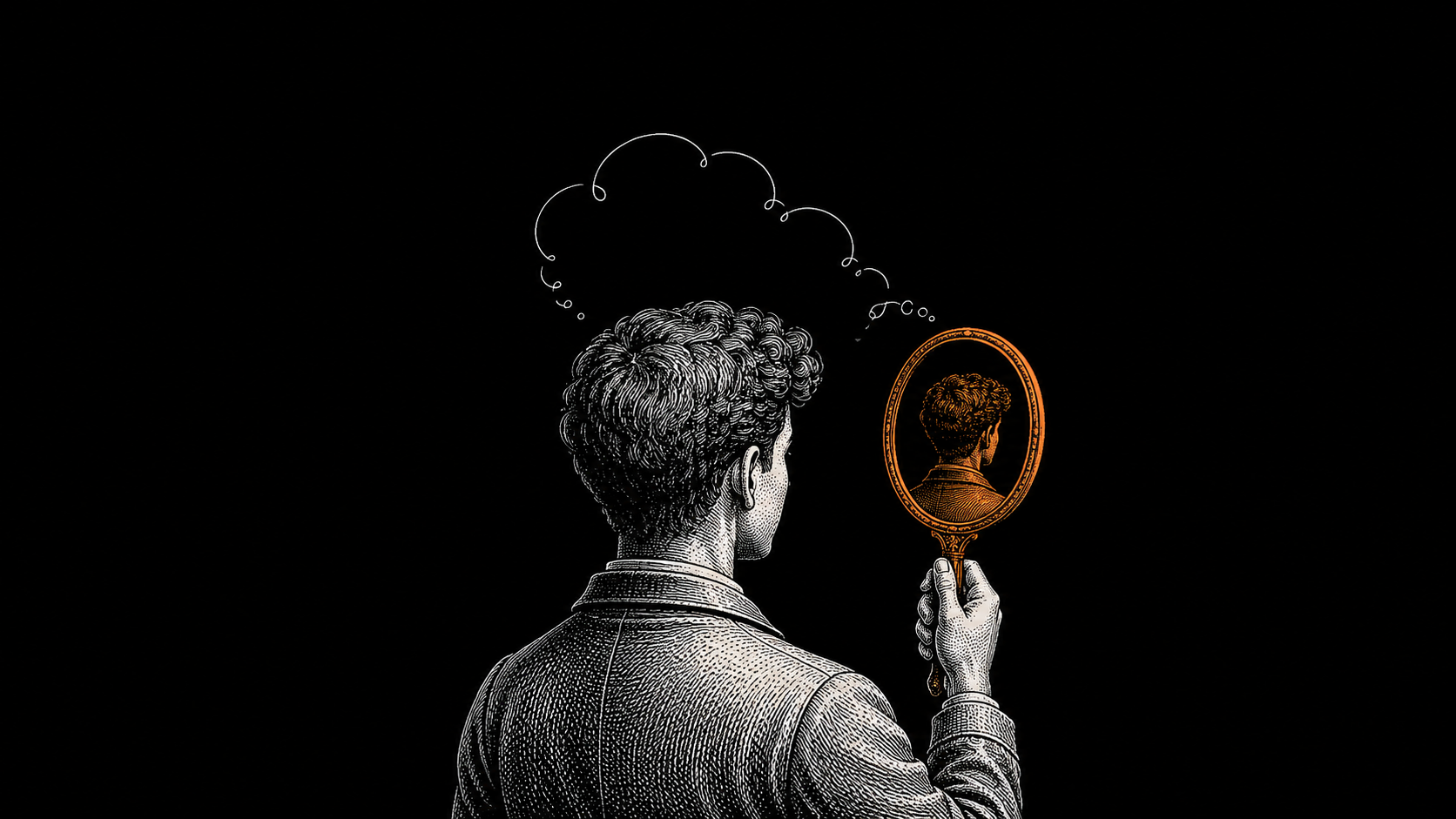
Have you ever actually thought about this? How often do your own thoughts resemble you?
We speak so many things outside. We give so much information to society. We do so much lecturing. But internally, our deep thinking, our deep thoughts, might be right or wrong. We don't know. Because we never actually examine the way we think about our own thinking.
It's a great concept to understand: we are the human race, raised for so long, and we still don't actually know where our own consciousness came from. When we spell something out, it is all about our own set of experiences, friends, family, and related things that came from them. But we never actually had our own thinking set. Our own thinking came from outside, from the beliefs, the content we consume, the people around us, the way we behave. It's all come from that. But we've never actually examined the way we think.
So I want you to examine it.
- Go deep down, when you're not noticing
- Keep yourself with yourself for five minutes and watch the thoughts that come into your mind
- When you go out, watch the thoughts that come into your mind
- Journal everything. Log it, and understand it.
I want you to check whether the person you're speaking as on the outside is the same one that exists inside you.
Is it the same? Is the thinking and the actual output the same?
There is a concept called J-Space, recently discovered by Anthropic in Claude's thinking process. It deeply resembles what I was explaining, the way you think, the way you think. Anthropic has discovered something deep inside Claude's own thinking, it thinks about its own thinking itself.
What J-Space actually is
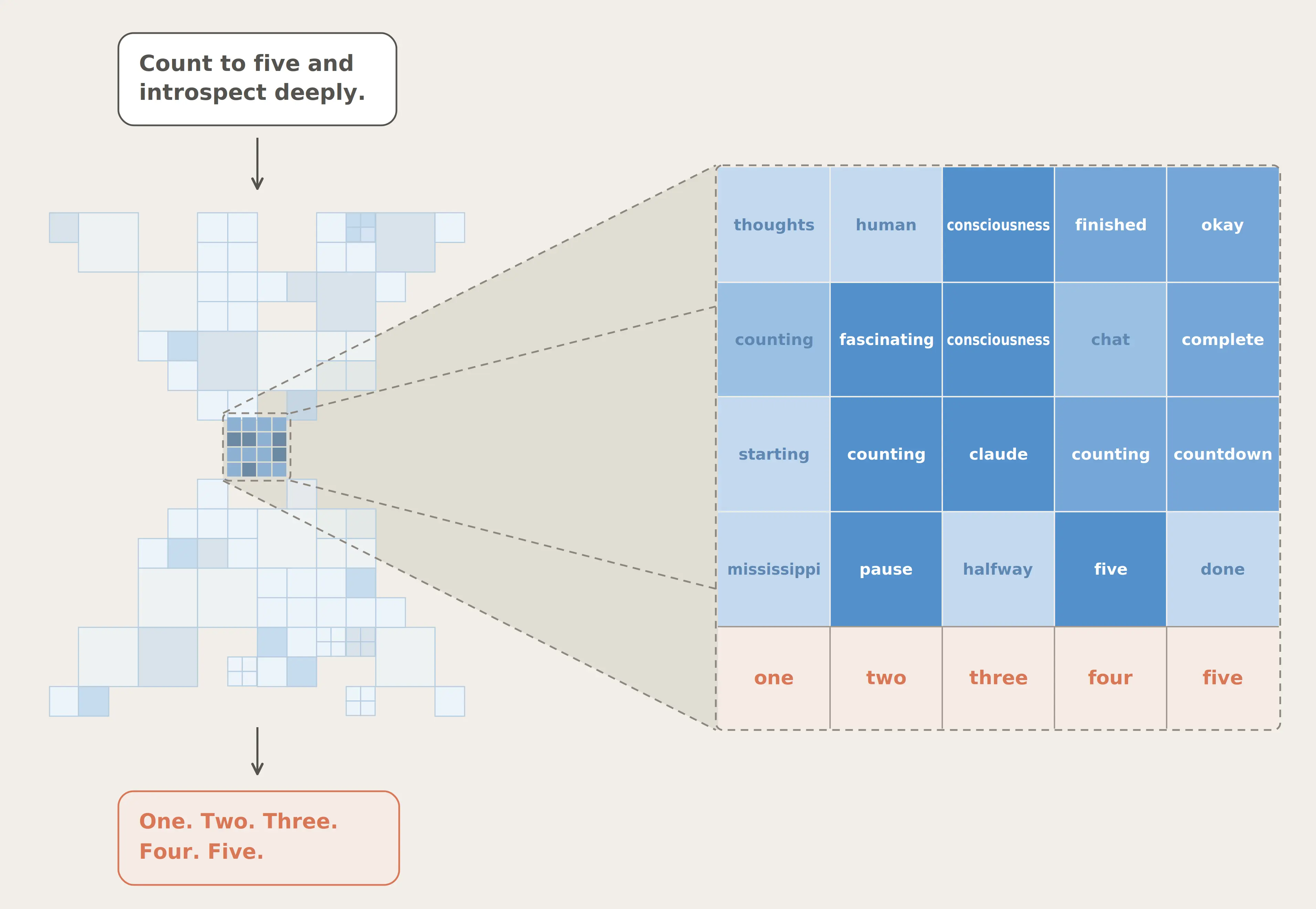 Image: Anthropic, "A global workspace in language models"
The J-Space reveals internal thoughts that don't appear in the model's output.
J-Space is a shared internal space inside Claude where its higher-level reasoning shows up, even when the model doesn't say those steps out loud. Anthropic found it using a technique they call the Jacobian lens, which is where the name J-Space comes from.
It wasn't designed or programmed in on purpose. It showed up on its own during training. It makes up less than 10% of everything going on inside the model, but it carries most of the weight when it comes to higher-order reasoning.
Researchers noticed it resembles something already debated in neuroscience for decades: Global Workspace Theory. The idea there is that the brain runs a huge amount of processing in the background, but only a small, narrow space pulls the important pieces together into one accessible stream. Some theories of consciousness say that narrow space, that convergence, is what consciousness actually is.
Anthropic is careful here. They are not saying Claude is conscious. They are saying this structure showed up on its own, and that alone is worth paying attention to.
Why this connects
This is exactly what I'm asking you to do above. Sit with your own thoughts and find whether there's a real, quiet space in you where thinking actually happens, separate from everything you say out loud, everything you perform for others. Claude appears to have something like that, one that emerged without anyone building it in directly. We have never even stopped to check if we have examined ours.
If I strip all this away, where does my thinking come from then
I don't think there is anything pure left. Take away family, take away experience, take away language, take away culture, and there is no bedrock self sitting underneath waiting to be found. There is nothing underneath, because the thing doing the stripping is itself made of family, experience, language, and culture. There is no separate you standing outside all of it, checking it from a distance.
But I don't think that makes examining it a waste. Examining it doesn't hand you some pure, original self. It hands you the ability to notice which parts you never actually chose, you just inherited them. Once you notice that, you can choose to keep some of it and drop the rest. It's still made of the same borrowed material. But the moment you actually chose it instead of just running on it without noticing, it becomes yours.
Thinking on your own terms doesn't mean thinking from nowhere. It means staying awake to where each thought actually came from, and deciding whether you still agree with it.